This self-paced online course brings together scientific and contemplative perspectives to investigate the nature of consciousness, perception, and the self. Drawing from neuroscience, cognitive science, and Buddhist philosophy and psychology, the course examines both the theoretical and experiential dimensions of human awareness.
Have you ever wondered what lies at the nature of human experience? What is it that allows us to have subjective experiences? How do we perceive the world around us? What is the nature of the self? And what happens in a near-death experience? In “Exploring Consciousness”, we explore these questions through the lens of neuroscience, philosophy, and Buddhist mind science.
You will hear from leading scientists and Buddhist scholars and practitioners as they explore the nature of consciousness, perception and the self, how meditation and mindfulness can influence our brain and well-being, as well as practical ways to apply these insights to your own life.
What's Included
Eight modules including bonus content
Multiple lessons per module
Up to 30 mins of video content per lesson
Downloadable lecture notes for every lesson
Online chat forum
Self-assessment quizzes for each module
Guided meditation practices
Downloadable handbook
Modules
Consciousness, Self, and the Brain
The Cognitive Science of Consciousness
Idealism, Consciousness & Spirituality
The Remedy for the Hard Problem of Consciousness
Consciousness in the Mind-Only School
Consciousness in the Middle-Way School
Investigating Consciousness in Science and Buddhism
Consciousness, Self, and the Brain – Prof. Anil Seth
Lesson 1: Consciousness and The Predictive Brain • Perspectives of Consciousness • Dimensions of Consciousness • Predictive Processing
Lesson2: Uncontrolled Perception, the Self, and Interoception • Uncontrolled Perception • Controlled Hallucination of a Self • Interoception and Its Predictions
Lesson 3: Meditation, Contemplative Dialogue, and Consciousness Distribution •Meditation and Predictive Processing •Buddhism and Neuroscience •Dreamachine and Consciousness Distribution
Module 2
The Cognitive Science of Consciousness – Prof. John Vervaeke
Lesson 1: Consciousness and the Nature of Wisdom •Neoplatonism – A Bridge Between Science and Spirituality •Relevance Realisation, Intelligence, and Wisdom
Lesson2: Nothingness, No-Thingness, and Relationality •Nothingness and No-Thingness •Relational and Process-Oriented Science
Lesson 3: Consciousness, Agency, and Morality • Brain-Consciousness Relationship • Determinism and Free Will • Morality and Connectedness
Module 3
Idealism, Consciousness, and Spirituality – Dr. Marjorie Woollacott
Lesson 1: What is Consciousness? • Materialism and the Hard Problem of Consciousness •“Idealism – Consciousness as the Basic Substance of the Universe
Lesson2: Neural Filters • Neural Filters
Lesson3: Neuroscience Research Supporting Idealism • Meditation •Psilocybin •Near-Death Experiences
Module 4
The Remedy for the Hard Problem of Consciousness – Prof. Elena Antonova
Lesson 1: Foundations of Consciousness Studies • Foundations of Consciousness Studies • Cognitive Science and Functionalism •Critiques of Reductionism
Lesson2: Neurophenomenology as a Framework • What is Neurophenomenology? •Applications in Mindfulness Research • Challenges and Innovations
Lesson 3: Groundlessness and Buddhist Integration •Understanding Groundlessness
Module 5
Consciousness in the Mind-Only School – GesheNamdak
Lesson 1: Consciousness in the Mind-Only School • Defining Consciousness in the Mind-Only School • The Nature of Perception and Reality • Subjectivity and Dualistic Appearances
Lesson2:The Causal Conditions of Mind-Only Perception •Storehouse Consciousness and Karmic Imprints • Habitual Patterns and Mental Constructs • Refuting Materialist Views of Reality
Lesson 3: Appearance and Reality in the Mind-Only School • Subjectivity of Perception • The Relationship Between Appearance and Consciousness • Implications for Understanding Reality
Module 6
Consciousness in the Middle-Way School – GesheNamdak
Lesson 1: Foundations of the Middle Way • Avoiding the Two Extremes • The Nature of Dependent Origination • Refuting Inherent Existence
Lesson2:Examining the Three Levels of Dependence • Dependence on Causes and Conditions • Dependence on Parts and Wholes •Dependence on Mental Imputation
Lesson 3:Understanding Self Through Dependent Origination • Implications of Grasping at an Inherent Self • Dependent Origination and the Emptiness of Self •Practical Implications of Dependent Origination
Module 7
Investigating Consciousness in Science and Buddhism – Geshe Tenzin Namdak & Prof. Anil Seth
Lesson 1: The Study of Consciousness • Neuroscientific and Buddhist Interest in Consciousness • Definitions of Consciousness
Lesson2: Self as a Construct • Defining the Self • Self and Interdependence •Interdependence of Perception
Lesson 3:Reality as a Construct • Meditation • Neuroplasticity •Controlled Hallucination
Module 8 (Bonus)
Consciousness in Buddhism – Why does it Matter? – Yangten Rinpoche & Prof. Elena Antonova
Lesson 1: Definitions of Consciousness •Buddhist Perspective on Consciousness • Neuroscientific Perspective on Consciousness • Distinctions of Consciousness
Lesson2: Importance of Investigating the Mind •Buddhist Perspective •Neuroscientific Perspective
Lesson 3:Consciousness Beyond the Brain •Tukdam •Research into Brain Regions •Bridging Contemplative and Neuroscientific Traditions
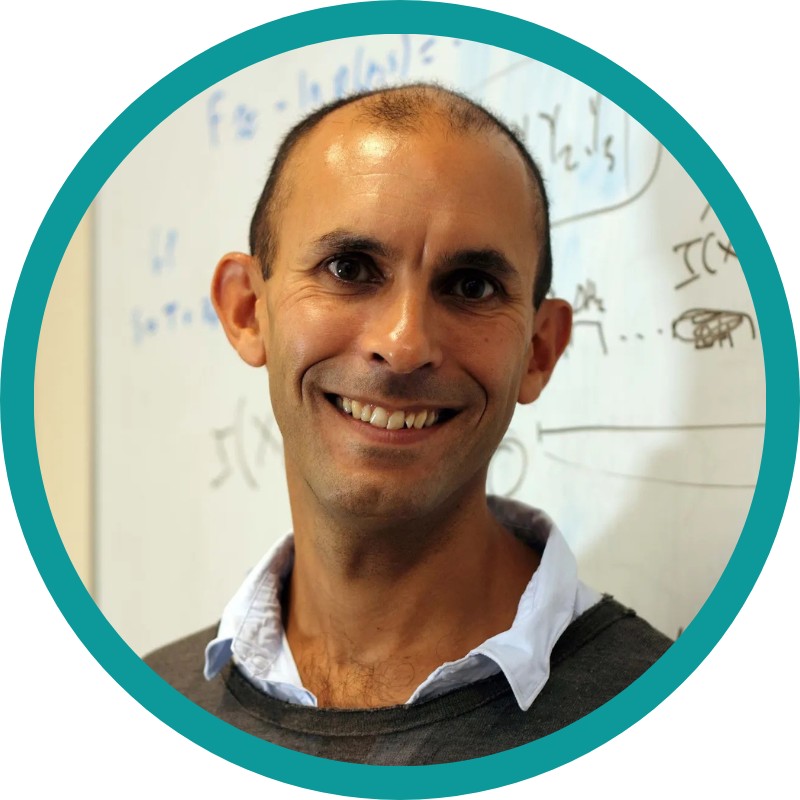
Dr. Anil Seth is Professor of Cognitive and Computational Neuroscience at the University of Sussex, Co-Director of the Canadian Institute for Advanced Research (CIFAR) Program on Brain, Mind and Consciousness, an ERC Advanced Investigator, Editor-in-Chief of the journal Neuroscience of Consciousness and a Wellcome Trust Engagement Fellow. He holds degrees in Natural Sciences (MA, Cambridge, 1996), Knowledge-Based Systems (MSc, Sussex, 1996), and Computer Science and Artificial Intelligence (Ph.D., Sussex, 2001).
He has published more than 200 papers and is listed in the Web of Science ‘Highly Cited Researcher’ index (2019, 2020, 2021).
His 2017 TED talk has been viewed more than twelve million times, and his new book Being You: A New Science of Consciousness was an instant Sunday Times top 10 bestseller, a Guardian book of the week and science book of the year, and a Financial Times science book of the year.
Prof. Anil SethProfessor of Cognitive and Computational Neuroscience
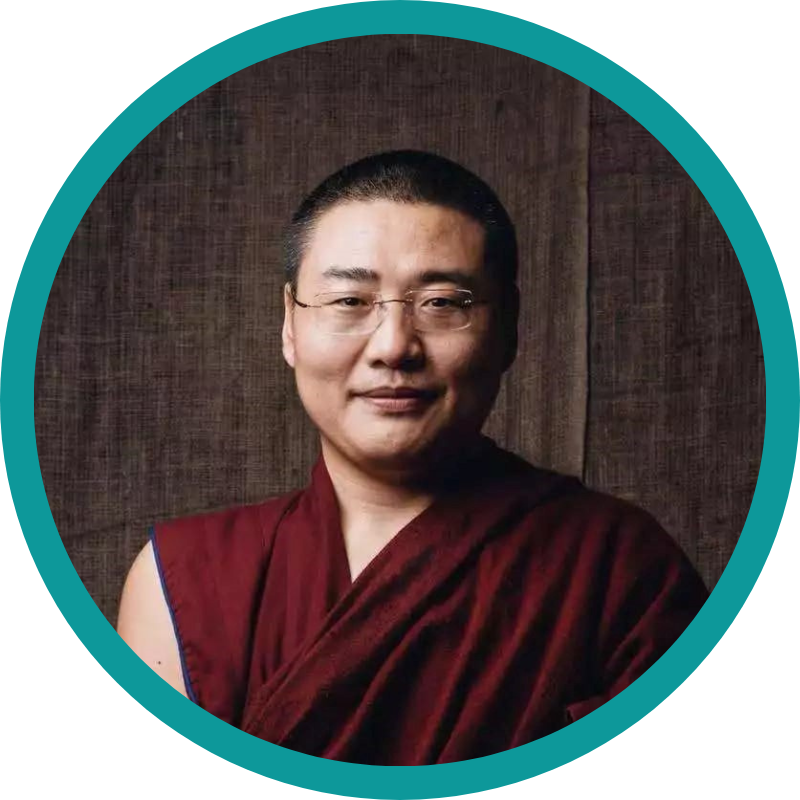
Geshe Tenzin Namdak first worked as an environmental researcher having graduated in hydrology from Van Hall Larenstein University, The Netherlands.
He started studying Buddhism at Maitreya Institute in 1993 and took ordination from His Holiness the Dalai Lama before engaging in his formal studies in Buddhist philosophy and psychology at Sera Jey Monastic University, South India, in 1997.
He completed the entire twenty-year Geshe program at Sera Jey in 2017 and the traditional one year Vajrayana study program at Gyume Tantric College in January 2019, the first Westerner to do so.
Because of his deep interest and background in science and as a member of Sera Jey’s Education Department he spoke on and organised various dialogues and conferences on contemporary science and ancient contemplative wisdom of the mind and its philosophy.
Currently, he is the resident teacher at Jamyang Buddhist Centre, London, and a Part-time Tutor at the Department for Continuing Education at the University of Oxford where he delivers courses on Buddhist Mind Science in this dept.
Geshe Tenzin NamdakResident Teacher at Jamyang
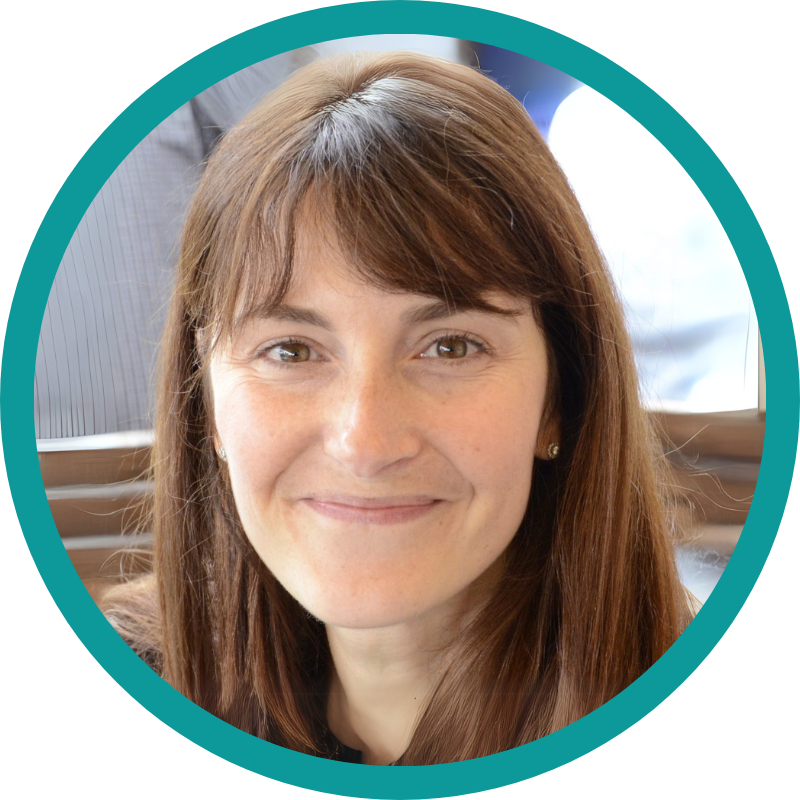
Dr. Elena Antonova is a Senior Lecturer in Psychology at Brunel University London and a Visiting Researcher at the Institute of Psychiatry, Psychology and Neuroscience (IoPPN), King’s College London.
After completing her BSc in Psychology at University College London and her PhD in Cognitive Psychology at the IoPPN, she held a number of postdoctoral research positions and was awarded the Templeton Positive Neuroscience Award, following which she joined the IoPPN as a Lecturer in Psychology.
Dr. Antonova is the author of numerous scientific publications on the effect of long-term meditation practice. Her research highlights the positive impact of meditation on mental health and wellbeing, as well as its role in managing and preventing mental disorders.
She has been actively involved in the Mind & Life Institute and Mind & Life Europe, promoting interdisciplinary scientific research into the effects of contemplative practices. In 2017, she was elected a Mind & Life Research Fellow for her contribution to contemplative science.
Dr. Elena AntonovaSenior Lecturer in Psychology
Dr. John Vervaeke is an Associate Professor, in the teaching stream. He has been teaching at the University of Toronto since 1994. He currently teaches courses in the Psychology department on thinking and reasoning with an emphasis on insight problem solving, cognitive development with an emphasis on the dynamical nature of development, and higher cognitive processes with an emphasis on intelligence, rationality, mindfulness, and the Psychology of wisdom. He is the director of the Cognitive Science program where he also teaches courses on the introduction to Cognitive Science, and the Cognitive Science of consciousness wherein he emphasizes 4E (embodied, embedded, enacted, and extended) models of cognition and consciousness .
In addition, he teaches a course in the Buddhism, Psychology and Mental Health program on Buddhism and Cognitive Science. He is the director of the Consciousness and the Wisdom Studies Laboratory. He has won and been nominated for several teaching awards including the 2001 Students’ Administrative Council and Association of Part-time Undergraduate Students Teaching Award for the Humanities, and the 2012 Ranjini Ghosh Excellence in Teaching Award.
He has published articles on relevance realization, general intelligence, mindfulness, flow, metaphor, and wisdom. He is first author of the book Zombies in Western Culture: A 21st Century crisis which integrates Psychology and Cognitive Science to address the meaning crisis in Western society. He is the author and presenter of the YouTube series, Awakening from the Meaning Crisis.
Prof. John VervaekeAssociate Professor of Psychology
Yangten Rinpoche was recognised at the age of 10 as the reincarnation of the previous Yangten Rinpoche in the Kham region of Tibet.
He began his formal monastic education at Sera Mey Monastic University in South India in 1990, studying Buddhist philosophy, logic, epistemology, metaphysics, and monastic discipline under renowned scholars.
He completed his studies with the highest monastic degree of Geshe Lharampa in 2006 and went on to study Tantra at Gyuto Tantric College, where he also served as Debate Assistant to the 17th Karmapa.
In 2008, Rinpoche was personally appointed by His Holiness the Dalai Lama to work in his office in McLeod Ganj, where he currently oversees the Monastic Ordination Section and leads the project to compile the collected teachings of His Holiness. He also regularly supports His Holiness during public teachings by offering short reviews and giving introductory lectures on Buddhism at His Holiness’s request.
Yangten RinpocheGeshe Lharampa
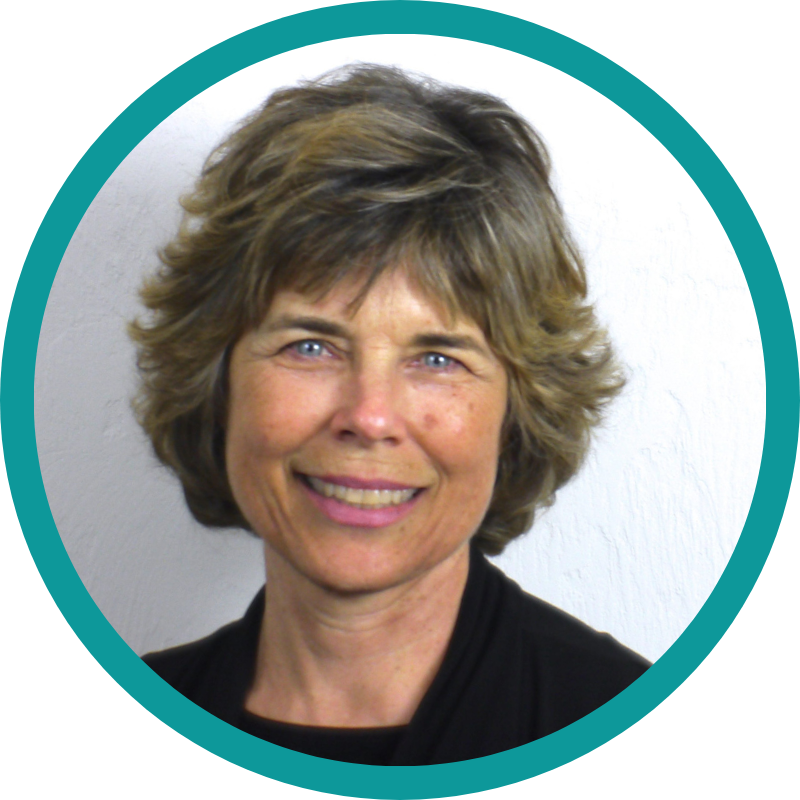
Marjorie Woollacott, Ph.D., is an Emeritus Professor and prior chair of the Dept. of Human Physiology, and member of the Institute of Neuroscience, at the University of Oregon. She taught courses in neuroscience and rehabilitation, as well as complementary medicine and meditation. She is President of the Academy for the Advancement of Post-Materialist Sciences (AAPS) and Research Director for the International Association of Near-Death Studies (IANDS). Woollacott has received over 7.2 million dollars in funding for her research in rehabilitation medicine.
Her current research interests are in meditation, spiritual awakening, end-of-life experiences and after-death-communication. She has published more than 200 scientific articles and written or co-edited eight books, including Is Consciousness Primary?. Another book, Infinite Awareness (2015) (winner of eight awards, including the 2017 Parapsychological Association Book Award, Eric Hoffer Book Award and the Nautilus Book Award) pairs Woollacott’s research as a neuroscientist with her self-revelations about the mind’s spiritual power. Her latest book is Spiritual Awakenings: Scientists and Academics Describe Their Experiences. It consists of short essays by 57 scientists about their spiritual awakenings and subsequent transformation, as well as the barriers they encountered when they tried to share these experiences with other academics and scientists.
Dr. Marjorie WoollacottEmeritius Professor of Physiology
Dr. Anil Seth is Professor of Cognitive and Computational Neuroscience at the University of Sussex, Co-Director of the Canadian Institute for Advanced Research (CIFAR) Program on Brain, Mind and Consciousness, an ERC Advanced Investigator, Editor-in-Chief of the journal Neuroscience of Consciousness and a Wellcome Trust Engagement Fellow. He holds degrees in Natural Sciences (MA, Cambridge, 1996), Knowledge-Based Systems (MSc, Sussex, 1996), and Computer Science and Artificial Intelligence (Ph.D., Sussex, 2001).
He has published more than 200 papers and is listed in the Web of Science ‘Highly Cited Researcher’ index (2019, 2020, 2021).
His 2017 TED talk has been viewed more than twelve million times, and his new book Being You: A New Science of Consciousness was an instant Sunday Times top 10 bestseller, a Guardian book of the week and science book of the year, and a Financial Times science book of the year.
Prof. Anil SethProfessor of Cognitive and Computational Neuroscience
Geshe Tenzin Namdak first worked as an environmental researcher having graduated in hydrology from Van Hall Larenstein University, The Netherlands.
He started studying Buddhism at Maitreya Institute in 1993 and took ordination from His Holiness the Dalai Lama before engaging in his formal studies in Buddhist philosophy and psychology at Sera Jey Monastic University, South India, in 1997.
He completed the entire twenty-year Geshe program at Sera Jey in 2017 and the traditional one year Vajrayana study program at Gyume Tantric College in January 2019, the first Westerner to do so.
Because of his deep interest and background in science and as a member of Sera Jey’s Education Department he spoke on and organised various dialogues and conferences on contemporary science and ancient contemplative wisdom of the mind and its philosophy.
Currently, he is the resident teacher at Jamyang Buddhist Centre, London, and a Part-time Tutor at the Department for Continuing Education at the University of Oxford where he delivers courses on Buddhist Mind Science in this dept.
Geshe Tenzin NamdakResident Teacher at Jamyang
Dr. Elena Antonova is a Senior Lecturer in Psychology at Brunel University London and a Visiting Researcher at the Institute of Psychiatry, Psychology and Neuroscience (IoPPN), King’s College London.
After completing her BSc in Psychology at University College London and her PhD in Cognitive Psychology at the IoPPN, she held a number of postdoctoral research positions and was awarded the Templeton Positive Neuroscience Award, following which she joined the IoPPN as a Lecturer in Psychology.
Dr. Antonova is the author of numerous scientific publications on the effect of long-term meditation practice. Her research highlights the positive impact of meditation on mental health and wellbeing, as well as its role in managing and preventing mental disorders.
She has been actively involved in the Mind & Life Institute and Mind & Life Europe, promoting interdisciplinary scientific research into the effects of contemplative practices. In 2017, she was elected a Mind & Life Research Fellow for her contribution to contemplative science.
Dr. Elena AntonovaSenior Lecturer in Psychology
Dr. John Vervaeke is an Associate Professor, in the teaching stream. He has been teaching at the University of Toronto since 1994. He currently teaches courses in the Psychology department on thinking and reasoning with an emphasis on insight problem solving, cognitive development with an emphasis on the dynamical nature of development, and higher cognitive processes with an emphasis on intelligence, rationality, mindfulness, and the Psychology of wisdom. He is the director of the Cognitive Science program where he also teaches courses on the introduction to Cognitive Science, and the Cognitive Science of consciousness wherein he emphasizes 4E (embodied, embedded, enacted, and extended) models of cognition and consciousness .
In addition, he teaches a course in the Buddhism, Psychology and Mental Health program on Buddhism and Cognitive Science. He is the director of the Consciousness and the Wisdom Studies Laboratory. He has won and been nominated for several teaching awards including the 2001 Students’ Administrative Council and Association of Part-time Undergraduate Students Teaching Award for the Humanities, and the 2012 Ranjini Ghosh Excellence in Teaching Award.
He has published articles on relevance realization, general intelligence, mindfulness, flow, metaphor, and wisdom. He is first author of the book Zombies in Western Culture: A 21st Century crisis which integrates Psychology and Cognitive Science to address the meaning crisis in Western society. He is the author and presenter of the YouTube series, Awakening from the Meaning Crisis.
Prof. John VervaekeAssociate Professor of Psychology
Yangten Rinpoche was recognised at the age of 10 as the reincarnation of the previous Yangten Rinpoche in the Kham region of Tibet.
He began his formal monastic education at Sera Mey Monastic University in South India in 1990, studying Buddhist philosophy, logic, epistemology, metaphysics, and monastic discipline under renowned scholars.
He completed his studies with the highest monastic degree of Geshe Lharampa in 2006 and went on to study Tantra at Gyuto Tantric College, where he also served as Debate Assistant to the 17th Karmapa.
In 2008, Rinpoche was personally appointed by His Holiness the Dalai Lama to work in his office in McLeod Ganj, where he currently oversees the Monastic Ordination Section and leads the project to compile the collected teachings of His Holiness. He also regularly supports His Holiness during public teachings by offering short reviews and giving introductory lectures on Buddhism at His Holiness’s request.
Yangten RinpocheGeshe Lharampa
Marjorie Woollacott, Ph.D., is an Emeritus Professor and prior chair of the Dept. of Human Physiology, and member of the Institute of Neuroscience, at the University of Oregon. She taught courses in neuroscience and rehabilitation, as well as complementary medicine and meditation. She is President of the Academy for the Advancement of Post-Materialist Sciences (AAPS) and Research Director for the International Association of Near-Death Studies (IANDS). Woollacott has received over 7.2 million dollars in funding for her research in rehabilitation medicine.
Her current research interests are in meditation, spiritual awakening, end-of-life experiences and after-death-communication. She has published more than 200 scientific articles and written or co-edited eight books, including Is Consciousness Primary?. Another book, Infinite Awareness (2015) (winner of eight awards, including the 2017 Parapsychological Association Book Award, Eric Hoffer Book Award and the Nautilus Book Award) pairs Woollacott’s research as a neuroscientist with her self-revelations about the mind’s spiritual power. Her latest book is Spiritual Awakenings: Scientists and Academics Describe Their Experiences. It consists of short essays by 57 scientists about their spiritual awakenings and subsequent transformation, as well as the barriers they encountered when they tried to share these experiences with other academics and scientists.
Dr. Marjorie WoollacottEmeritius Professor of Physiology
Course is now Live! Enroll now for immediate access.
Regular
Our regular pricing
£
199
1 year access
Sponsor
Our sponsor pricing
£
299
1 year access
Payment Plans
From: £66.33 / month for 3 months
£
66
,33/month
1 year access
Want to give this course as a gift? Choose an e-gift cardhere
Scholarships
Our aim is to make this course accessible in ways that strengthen diversity and representation in contemplative science. To ensure and promote greater equity, our scholarships are designed for those who are often underrepresented in the field:
Scholarships are also in place to support registered Dharma students who wish to deepen their study of the Buddha Dharma through the lens of scientific discovery.
Sign up to our dedicated newsletter and our online learning digest receive updates on new courses and exclusive information about our e-Learning programme!
To help ensure and promote greater equity in contemplative science, our scholarships are designed for those who are often underrepresented in the field:
Women in science
People of the global majority in science
Scholarships are also in place to support registered Dharma students who wish to deepen their study of the Buddhadharma through the lens of scientific dialogue.
If this speaks to you, we’d love to hear from you. Please complete the form below to apply. Our team reviews applications carefully, and you can expect a reply within 14 days.